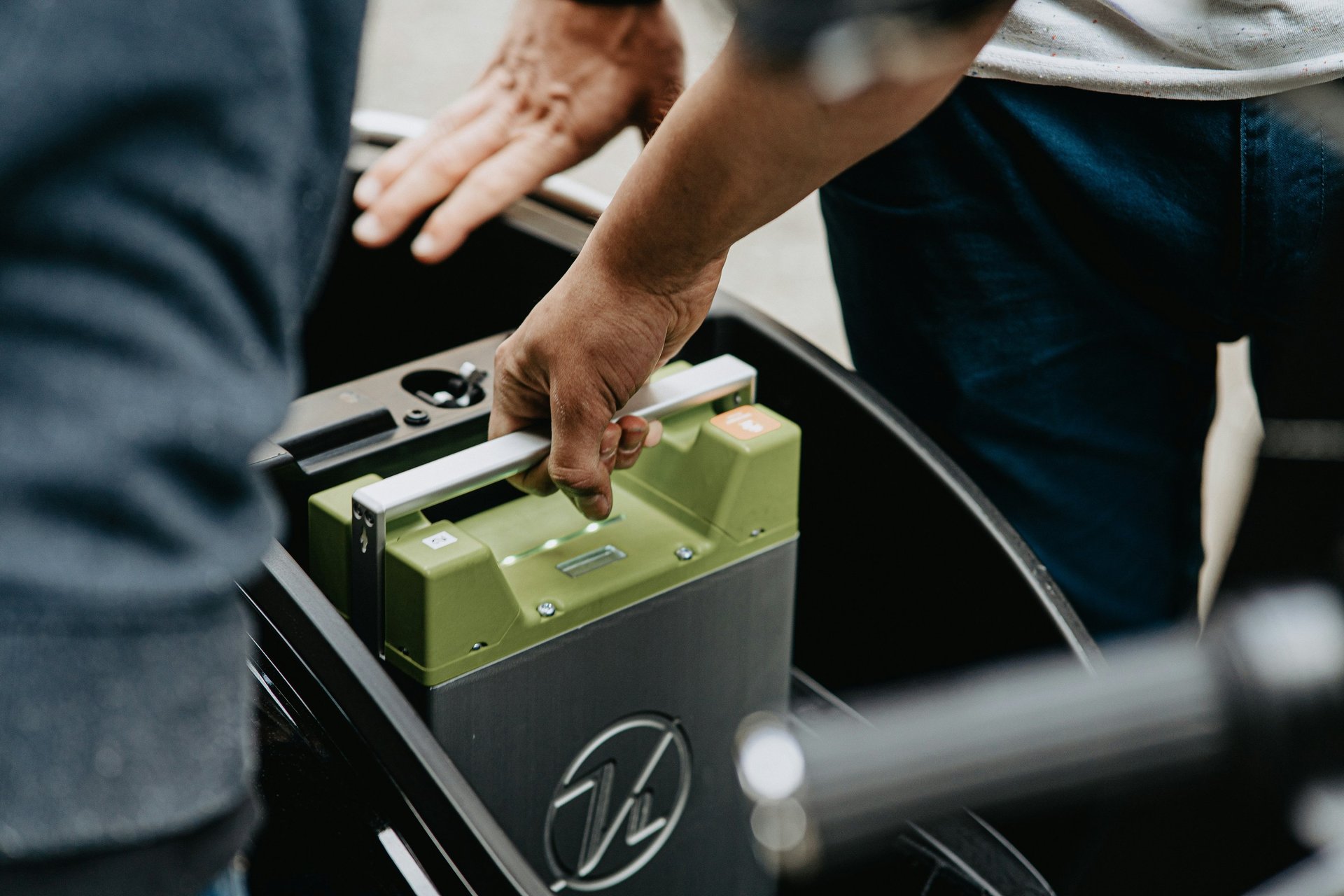
Ternary Lithium vs. Lithium Iron Phosphate: Which Battery Belongs in Your Power Station?
When you shop for a portable power station or solar generator, it's easy to focus on the headline numbers like the watt-hours, ports, and charging speed, but the single biggest factor in how safe your unit is and how long it lasts is something most buyers overlook: the battery chemistry inside.
Two types dominate the market:
NMC: ternary lithium (technically nickel-cobalt-manganese) and
LiFePO4: lithium iron phosphate (sometimes written LFP). Here's how they compare on the things that actually matter for backup power.
Safety
This is the most important difference. If a battery overheats and enters thermal runaway, the two chemistries behave very differently. Ternary lithium can smoke, catch fire, or, in rare cases, react violently. LiFePO4 has a much higher decomposition temperature, typically above 500°C, and even when damaged, it tends to emit some smoke rather than ignite. For a device you keep in your home, your car, or near your family, that gap matters.
Winner: LiFePO4.
Lifespan
Cycle life is the number of charge-and-discharge cycles a battery survives while keeping at least 80% of its capacity. LiFePO4 typically lasts 2,000–3,000+ cycles, often a decade of regular use. Ternary lithium usually delivers fewer. Longer life means lower cost per year and far less e-waste.
Winner: LiFePO4.
Energy Density
Ternary lithium stores more energy in less weight and space. In an electric car, that means longer range; in a power station, it means a lighter unit for the same capacity. If you're counting every gram in a backpack, that's a real edge.
Winner: Ternary lithium.
Cost
LiFePO4 is the more affordable chemistry. Ternary lithium runs roughly 2.5× more expensive because it relies on costly metals like nickel and cobalt, and its price swings with the commodities market.
Winner: LiFePO4.
Cold-Weather Performance
Ternary lithium holds up better in extreme cold, working down to about −30°C versus −20°C for LiFePO4. At −20°C, ternary keeps 70–90% of its output while LiFePO4 drops to 50- 70%. In freezing climates, that's a meaningful difference — though in warm, tropical conditions it rarely comes into play.
Winner: Ternary lithium.
The Bottom Line
For a portable power station you'll keep at home and rely on for years, safety and lifespan outweigh a small saving in size and weight. That's exactly why LiFePO4 has become the standard for quality backup power and the chemistry behind every Moderngrid power station. You give up a little portability, but you gain a battery that's built to last and far less likely to fail dangerously.
When you're comparing power stations, don't stop at the watt-hours. Ask what's inside. The chemistry is the real measure of what you're buying.
Looking for a LiFePO4 power station built for everyday backup? Explore the Moderngrid lineup.
My post content
MODERNGRID
sales@moderngrid.ph
+63-915-751-1148


GET IN TOUCH
IMPORTANT: FOR PRODUCT INQUIRIES OR DISTRIBUTION PURPOSES ONLY
support@moderngrid.ph
IMPORTANT: FOR SALES AFTER-SUPPORT ONLY
EXPLORE
HELPFUL LINKS
Career
Team
Products
Camping
Work from Home


© 2026 Moderngrid. All Rights Reserved. “Moderngrid” and “Moderngrid Solar” are registered trademarks of Moderngrid Network OPC.
PRIVACY & TERMS